
Agentic Engineering: What Really Separates It from Vibe Coding
Mike Codeur
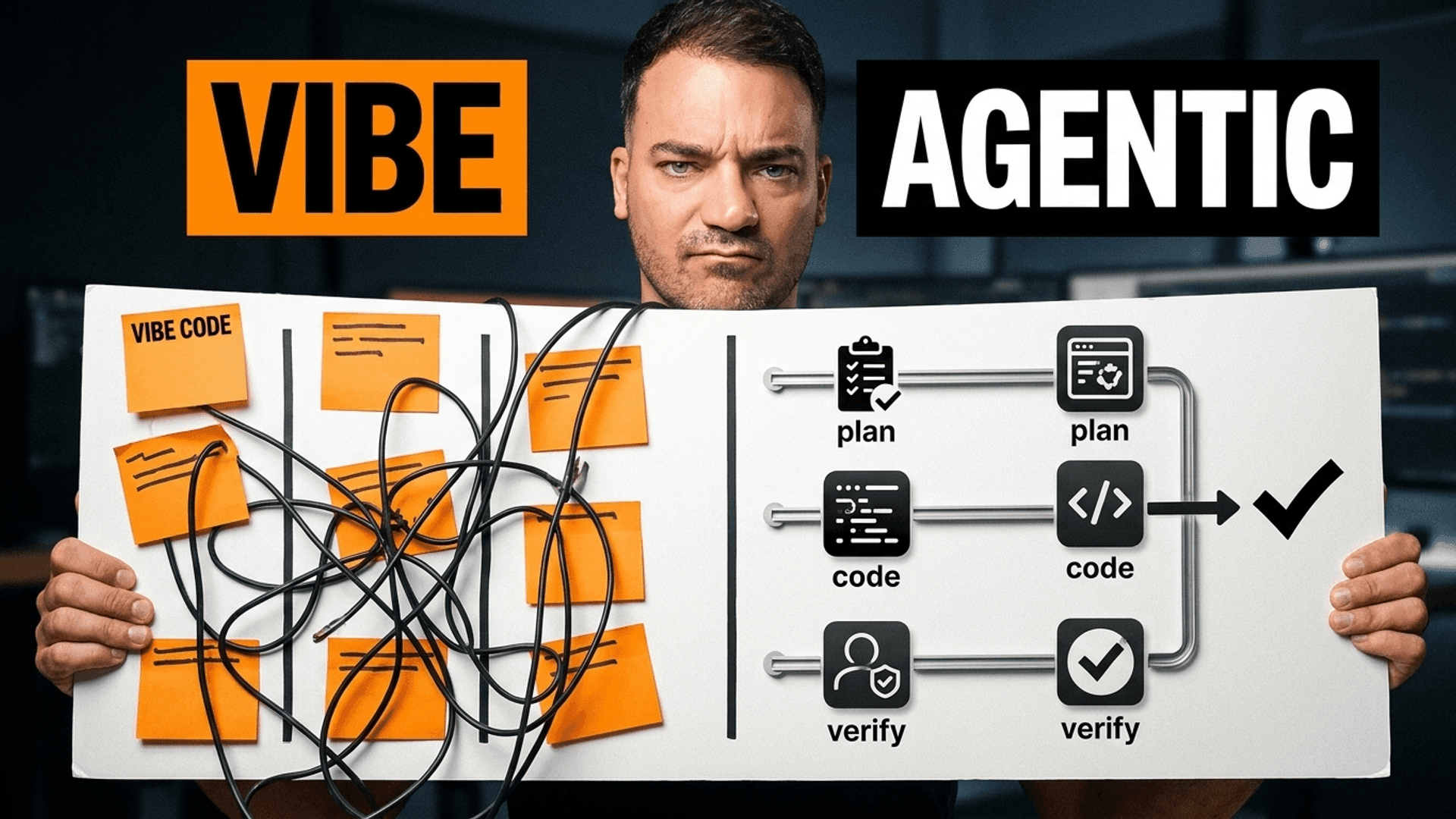
Generating 100% of your code with AI no longer distinguishes a vibe coder from an experienced developer or an agentic engineer. In 2026, all three may use Claude Code, MCP servers, subagents and worktrees. They may even share the exact same setup.
The difference lies in how they frame, delegate and verify the work.
Three practices that now look identical
An experienced developer uses AI to accelerate execution while keeping most of the product and architecture in their head. They split features, watch decisions and can judge the result precisely.
A vibe coder often delegates a broad outcome and accepts the output once it appears to work. This can be excellent for exploration, prototypes and disposable tools. It becomes risky when software must be maintained, secured or trusted with real data.
An agentic engineer makes their vision transferable. They define the objective, constraints, dependencies and acceptance criteria. The agent can then inspect the repository, propose a plan, implement, test, fix issues and return a verifiable result.
| Practice | Delegation size | Mastery and verification |
|---|---|---|
| Chaotic micro-development | Small | Low |
| Experienced AI-assisted developer | Small to medium | High |
| Vibe Coding | Large | Low |
| Agentic Engineering | Large | High |
Why the 2025 model is outdated
In 2025, models lost coherence more easily across long loops. Context windows were smaller and agents needed constant micromanagement.
In 2026, models can hold much larger contexts, use tools, inspect repositories and own larger blocks of work. A user story can move from exploration to tests, while independent stories progress in parallel.
Reliability is not automatic. As delegation grows, framing and validation must become more explicit.
The agentic development loop
A useful loop does not stop at planning and coding. It usually includes:
- an objective and acceptance criteria;
- repository and dependency exploration;
- a revisable plan;
- implementation by specialized agents;
- tests, review and correction;
- human validation at meaningful checkpoints.
The human does not disappear. Control moves away from line-by-line instructions toward framing, verification and accountability.
Agentic Engineering is not an agent-count contest
Adding five agents, MCP servers and parallel execution can increase autonomy without increasing mastery. Professional infrastructure can still produce vibe coding at scale.
A better measure is the size of the block you can delegate cleanly, whether you understand the returned solution and whether you can reduce autonomy when uncertainty rises.
Watch the complete masterclass
I recorded a 50-minute video that separates these profiles, explains the autonomy/mastery matrix and shows the path toward Agentic Engineering.