
My Agentic OS Goes Further Than Hermes
Mike Codeur
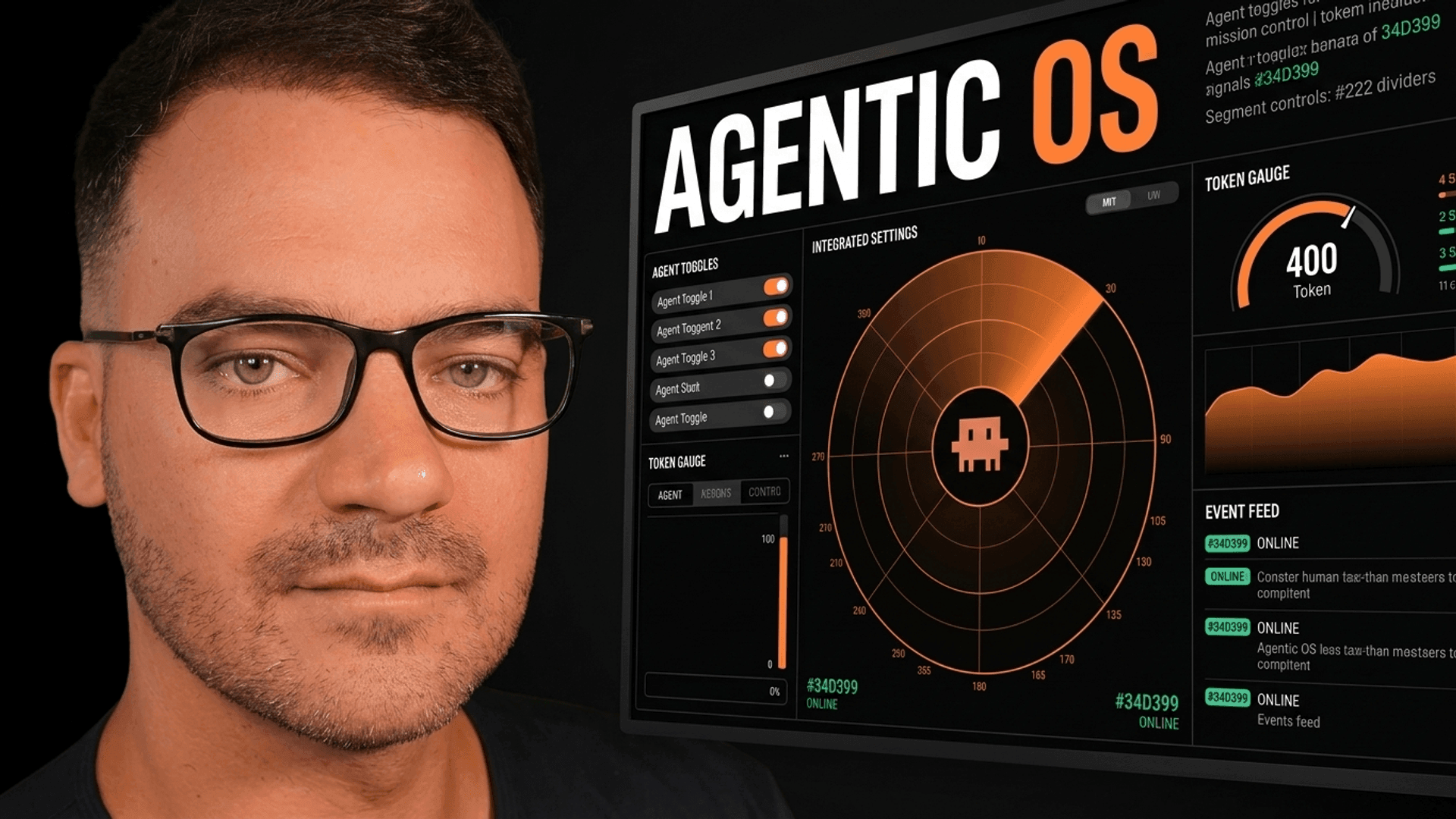
General-purpose AI assistants are extremely useful. They connect models, tools, channels and integrations. But when an agency needs to reproduce its actual operating model—roles, approvals, repositories and review procedures—it often ends up wrapping a generic product that was never designed to become its internal software.
That is the problem I wanted to solve with Agentic OS: a cockpit built directly around Claude Code to control agents, tasks and missions through an interface I can modify.
Why not simply use a general-purpose platform?
OpenClaw and Hermes cover a broad surface area. That is their strength. My goal is different: make Claude Code the central runtime, then shape the experience around the real workflow.
| System | Priority | Positioning |
|---|---|---|
| OpenClaw | General gateway | Channels, providers and automation |
| Hermes | General agent | Models, memory, skills and tools |
| Agentic OS | Claude Code workflow | Customisable runtime, agents, tasks and screens |
This is not about claiming that one system is universally better. They optimise different layers.
Two execution modes for Claude Code
Headless mode
claude -p --output-format stream-json works well for bounded tasks:
- a Kanban card starts a mission;
- text, reasoning, tools and usage are streamed;
- the end of the turn is deterministic;
- the result can be stored and reviewed.
Interactive tmux mode
For sessions requiring manual continuation or the full interactive terminal experience:
- a real Claude Code session remains attachable;
- the process survives a Node server restart while tmux stays alive;
- I can observe it in the UI and resume it from the terminal.
Headless for clean execution. Tmux for a persistent interactive session.
Obsidian, SQLite and Claude Code
The architecture deliberately separates knowledge from execution:
- Obsidian stores what the system knows: context, procedures, rules and long-term memory;
- SQLite tracks what the system does: tasks, missions, events, statuses, tokens and costs;
- Claude Code executes agents, skills and tools between those two layers.
An agency workflow from start to finish
A client request can follow an observable cycle:
- create a task in the Kanban;
- assign a Claude Code agent;
- select procedures stored in
.claudeformats; - start the mission;
- monitor streams, tools, tokens and results;
- perform human review before delivery.
Agents are not locked into a proprietary format. They map to files in .claude/agents and remain editable and customisable.
A customisable codebase, not a magical SaaS
Agentic OS is currently a controllable codebase and a private cockpit. It can become the foundation for an agency’s own approvals, client views and internal procedures.
It is not a five-minute multi-user SaaS, a ready-made SSO/RBAC platform, a distributed orchestrator, or an application that should be exposed directly to the public Internet.
Its value is that you control the runtime, the formats and the source code.
Watch the full demonstration
The video covers the product, both runtimes, the Kanban, agents, skills, metrics and current limitations.
Watch “My Agentic OS goes further than Hermes”
For more field notes on agentic development, join The Agentic Dev.