
Securing your SaaS with AI agents (lessons from a rogue pentest)
Mike Codeur
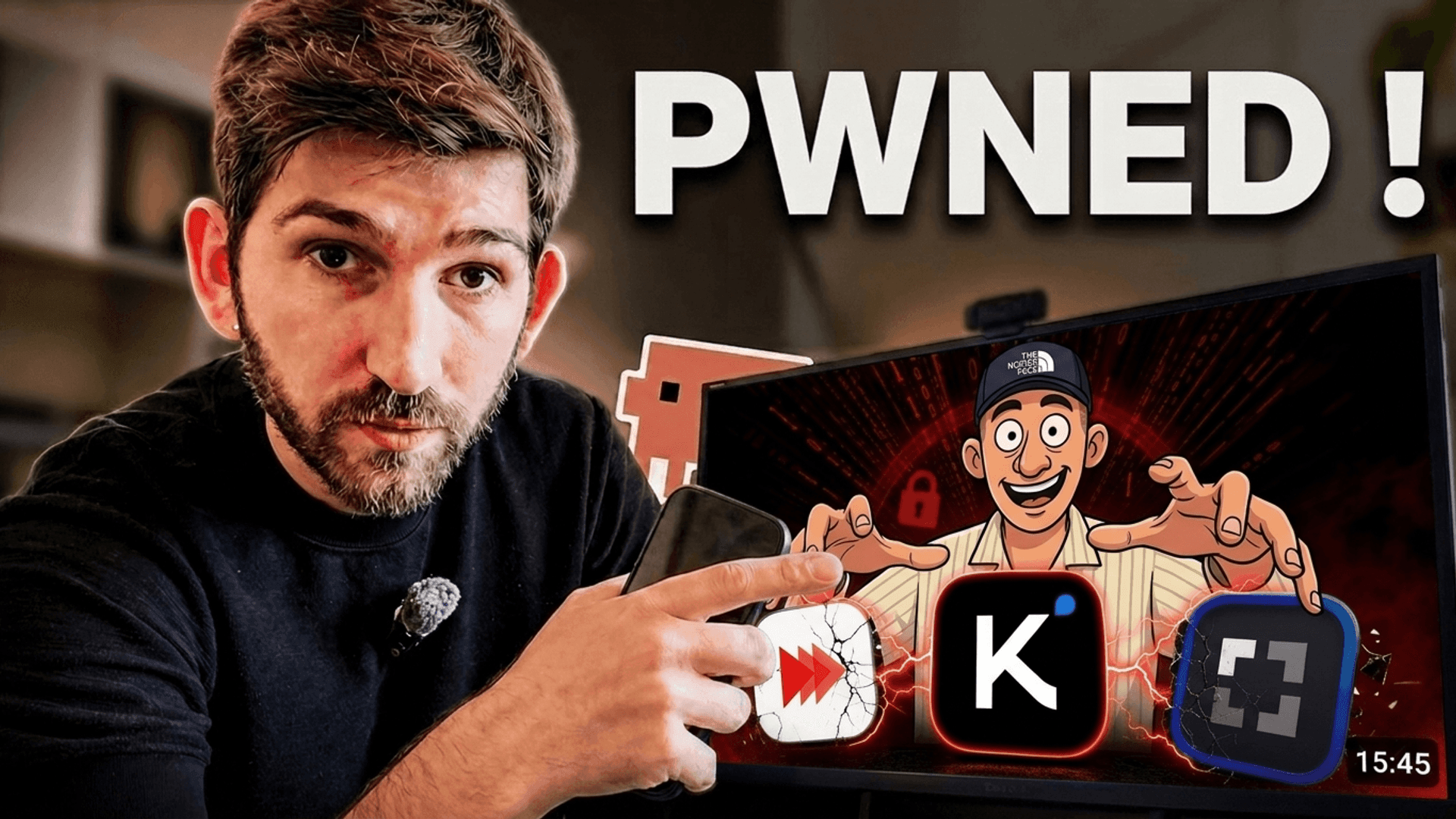
A developer decided to "pentest" a fellow builder's SaaS. Without warning. A Stripe test card, a flaw in the payment flow, and a paid subscription obtained for free. He got caught by the logs: his email in plain text, visible on the victim's side.
The victim is Benjamin (BenjaminCode), a friend. I won't name the author: that's exactly the attention he's after. But the incident is just a pretext. The real point is this: AI makes pentesting trivial. Anyone can now launch an agent that probes your SaaS in production. The only sustainable answer is an agentic defense that runs continuously.
Why this matters now
Probing an app used to take time and skill. Today, an AI agent generates disposable emails, tests endpoints, attempts payments with test cards and documents everything, in minutes. The cost of an opportunistic attack has dropped to nearly zero.
The takeaway: if you run a SaaS in production with real users, you will be probed. It's not a question of "if" but "when." The good news: the same agents that make attacks easy make defense automatable.
The 3 agents guarding my SaaS
I rely on a triptych: prevent, fix, monitor. Three agents, three roles.
1. Prevent — the audit agent
An agent that continuously scans the code and looks for flaws before they ship: exposed secrets, vulnerable dependencies, unprotected routes, missing validation. I run it weekly (repo-security-audit) and it produces a prioritized report.
2. Fix — the dependency agent
An agent that watches dependency CVEs, prioritizes by severity and opens update pull requests on its own. Not raw Dependabot: an agent that triages, explains the risk, and proposes the fix.
3. Monitor — the log analysis agent
This is the one that spotted the attacker. An agent that reads production logs continuously and detects abnormal patterns:
- a test card showing up in a real payment,
- repeated hits on admin endpoints,
- attempts to exploit the payment flow.
Real-time alerts. This is exactly the kind of agent that "burned" the attacker in the incident: the logs recorded everything.
Lessons from the flaw (app hardening)
Beyond agents, the incident is a reminder of basics too many SaaS neglect:
- Strictly separate test and prod. A test card must NEVER validate a payment in production.
- Validate the price server-side. Never trust the front end for a "free" or a discount.
- Sign and verify Stripe webhooks (signing secret is mandatory).
- Rate-limit sensitive endpoints.
- Mask sensitive data in logs. The irony of the case: the attacker didn't mask his email. Don't log anything in plain text either.
What about the law?
Breaking into someone's system without authorization isn't a "clever move," it's a crime. In France, fraudulent access to and use of an automated data system is punished under articles 323-1 and following of the Criminal Code. A "discreet" video that hints at the target, without warning the victim, doesn't protect the victim: it protects the author.
The takeaway
AI made attacks free. Defense must become automatic. Three agents (prevent, fix, monitor) plus a few hardening rules, and you move from a reactive posture to a continuous one.
I show the full setup on video, with the log analysis agent demo: watch on YouTube.
To go further on agentic dev and security, join my newsletter The Agentic Dev.