
The premium model does not code faster. It thinks.
Mike Codeur
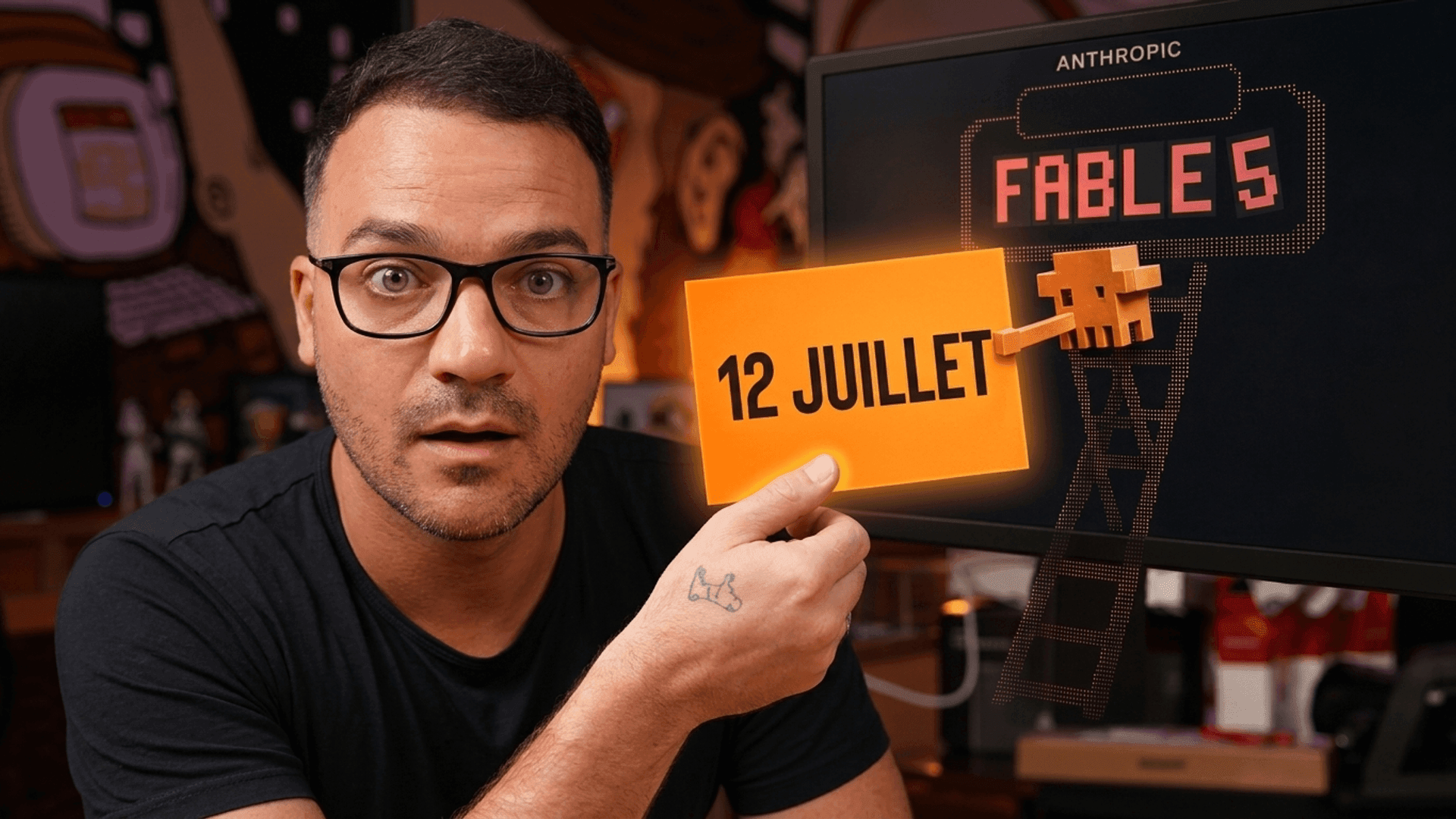
Fable 5 was included in Claude Pro and Max subscriptions. That window closed on 12 July: it now runs on paid credits.
Good. While it was included, the question never came up and most people burned it coding slightly faster. Now that it costs something, the real question arrives: when does a premium model earn its price?
The mistake: thinking the premium model codes better
That is the instinctive read. More expensive model, therefore better code, therefore I put it everywhere.
That misses the point.
A premium model like Fable 5 is not the model that codes faster. It is the model that thinks: deep analysis, long autonomous tasks, the ability to run for hours while verifying and correcting its own work.
Using it to rename variables is paying a team of architects to lay tile.
The principle: premium is the brain, cheap is the hands
Here is the rule, and everything else follows from it.
The premium model does what requires depth: framing, analysing, planning, holding a long run. Repetitive, sequential execution you do later, on a cheaper model.
Look at the gap — it justifies the split on its own:
| Model | Input / M tokens | Output / M tokens |
|---|---|---|
| Fable 5 | $10 | $50 |
| Opus 4.8 | $5 | $25 |
| Sonnet 5 | $3 ($2 launch pricing through 31 August) | $15 ($10 launch pricing) |
Paying premium rates for mechanical execution is a choice. Rarely a good one.
Mode A: the long autonomous run
The first use that justifies the price is the job you would never start by hand.
A mass migration, for instance. You set the objective with /goal (an official Claude Code command, documented by Anthropic) and let it run:
/goal migrate the whole monorepo to [X], tests green, lint clean
What happens next is the real demonstration: it works for hours, corrects itself, converges. A job you estimated at two weeks by hand gets done in one run.
That is where premium is irreplaceable, because the skill involved is not generating code. It is holding a course across hundreds of steps without drifting. A cheaper model gives out along the way.
One guardrail, learned the hard way: dedicated branch. Never production. A multi-hour autonomous run is something you want to be able to throw away.
Mode B: extreme planning
This is the most profitable mode, and the most ignored.
Take a classic pipeline: Research → Plan → Execute → Review → Ship.
Instinct says run it all on the best model. Do the opposite: only Research and Plan go on the premium model. Execute, Review and Ship run later, on a cheaper one.
Why it works: the plan becomes a durable asset. A good plan contains the steps, the traps, and the definition of done. Once it exists, executing it no longer requires intelligence, it requires rigour. And rigour is something a cheaper model has.
Every cheap executor inherits the planner's quality without paying its price. You pay for the brain once and reuse it ten times.
The combo
The two modes mix, and that is when it gets serious.
The premium model does everything that requires depth now: the framing and the big run. The rest runs itself afterwards, for a fraction of the cost.
What actually matters
One line sums this up better than any benchmark comparison:
What you need to learn is not the model. It is the work you point it at.
Frontier models have become good enough that the limit is no longer their capability. The limit is your ability to frame the job you hand them.
And that skill does not expire at the next launch.
I show both modes in the video, on my real repos: The 2 things worth doing with a premium model
And if you want this kind of method every week, it is in The Agentic Dev.