
I Built an AI Agent Army with OpenClaw — Multi-Agent Orchestration
Mike Codeur
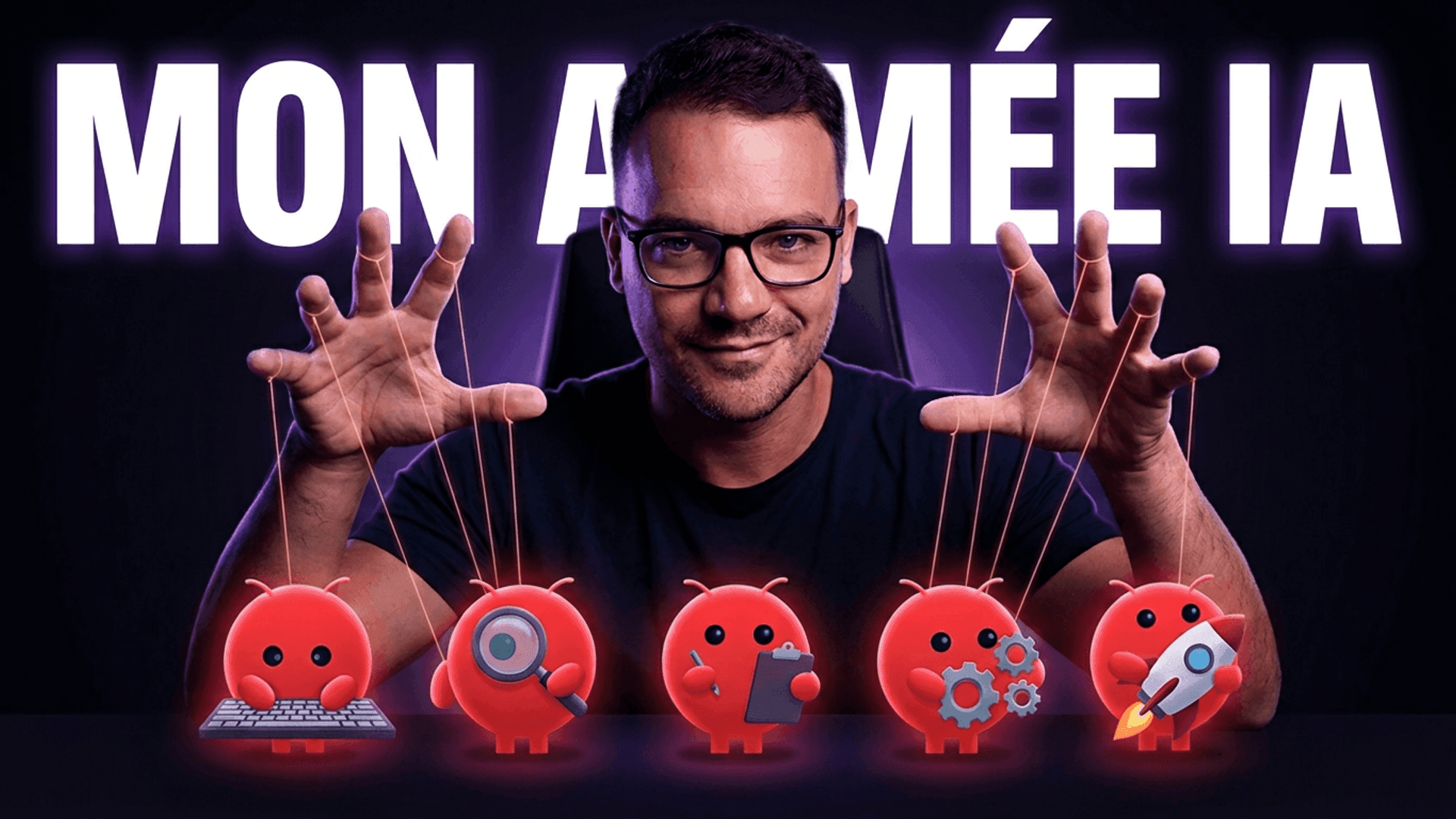
Multi-Agent AI Orchestration: The Future of Autonomous Development
Multi-agent orchestration is the ability to make multiple specialized AI agents work together on the same project. Each agent has its role, its skills, and they communicate to accomplish complex tasks.
In this video, I test this approach with OpenClaw — an open-source framework that lets you create, coordinate and monitor AI agents.
What I Tested
Orchestration Dashboards
I explored 3 visualization tools:
- OpenClaw Studio — real-time agent timeline, exchange visualization
- Classic Dashboard — overview of active sessions
- Mission Control — kanban board for agent-assigned tasks
The Multi-Agent Setup
The principle is simple:
- A main agent (orchestrator) receives the mission
- It breaks down the work into subtasks
- It creates specialized sub-agents (frontend, backend, tests...)
- Each agent works on its part
- The orchestrator coordinates and validates results
3 Levels of Control
| Level | Description | When to use |
|---|---|---|
| Fire & Forget | Launch it, come back later | Simple, well-defined tasks |
| Passive Supervision | Monitor via dashboard | Moderately complex tasks |
| Active Supervision | Intervene in real-time | Critical or experimental tasks |
My Honest Take
Multi-agent orchestration is impressive when it works. Seeing 3-4 agents coding in parallel on a project is the future.
But let's be honest:
- The pipeline sometimes stalls — an agent waits for a response that never comes
- Token costs can explode on long tasks
- Quality heavily depends on the clarity of initial instructions
We're at the very beginning. But the doors this opens for the next 2-3 years are enormous.
Tools Used
- OpenClaw — multi-agent orchestration framework
- OpenClaw Studio — visualization dashboard
- Mission Control — kanban for AI agents
Watch the Full Video
👉 https://mkc.sh/openclaw-orchestration?utm_source=blog
📩 Get this kind of content every week: → https://mkc.sh/the-agentic-dev?utm_source=blog